
AI-Forward Developer Experience Vision
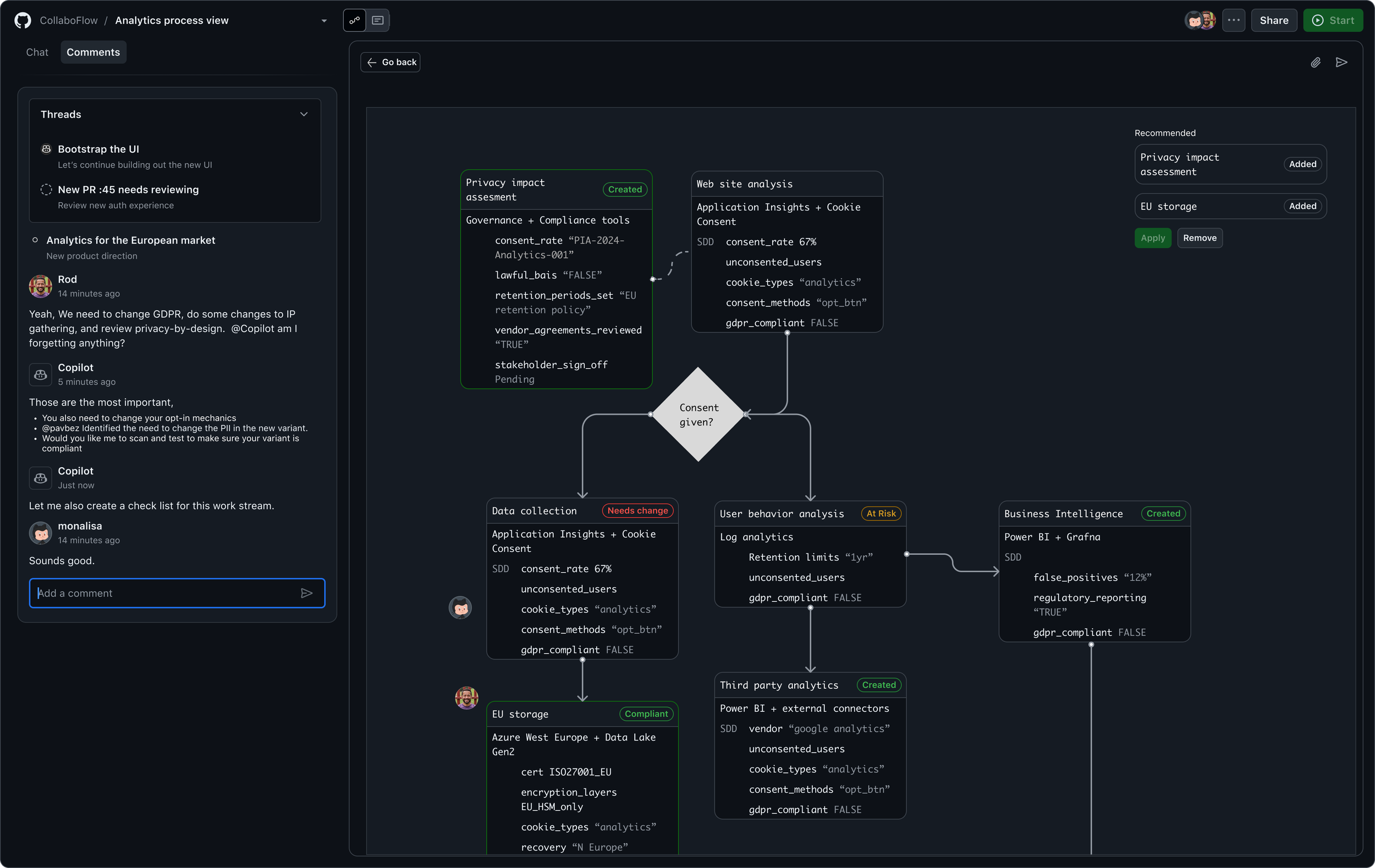
Wrokflow editor with team conversational element
Reimagining how developers interact with complex codebases in an AI-accelerated future
This project explored how AI could transform developer workflows - reducing cognitive load and enabling teams to build complex software without deep codebase familiarity. Through weekly prototypes and demos, we shaped a strategic vision for AI-integrated developer tools.
I co-led design exploration with another designer, running weekly sprints that combined Figma prototypes with coded demos. We rapidly tested ideas, gathered stakeholder feedback, and synthesized insights to inform strategic planning.
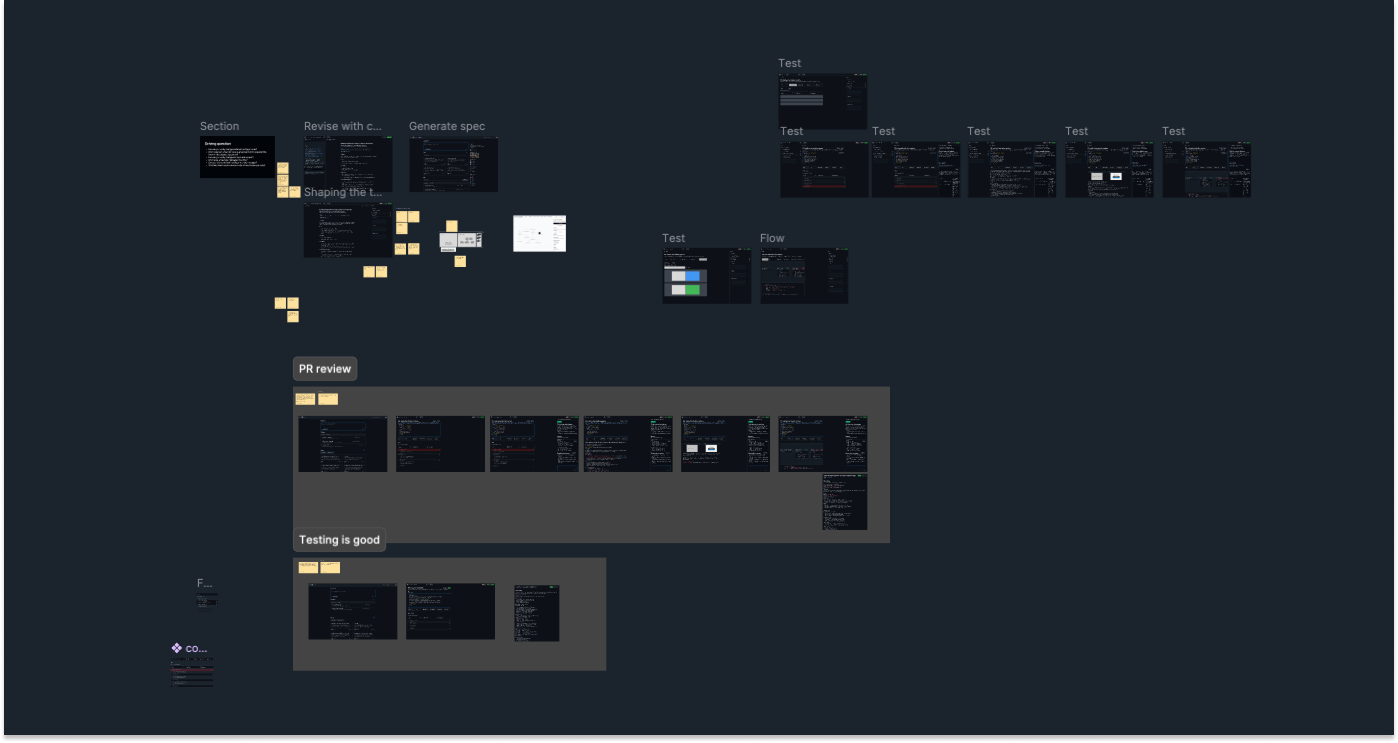
The Challenge
Developers face fragmented workflows when working with unfamiliar code. Understanding, reviewing, and debugging requires extensive ramp-up time and repetitive effort. We asked: How might AI agents work alongside humans to streamline development without overwhelming users?
One key challenge was letting AI handle complexity without making developers feel locked out of their own code. We designed a layered abstraction system that let users toggle between high-level planning views and detailed code inspection. Developers could ask the AI to "modernize this authentication flow" and see a strategic overview, then drill into specific files to understand exactly what changed and why. This approach preserved developer agency while reducing cognitive load - you could stay at the altitude that matched your current intent.
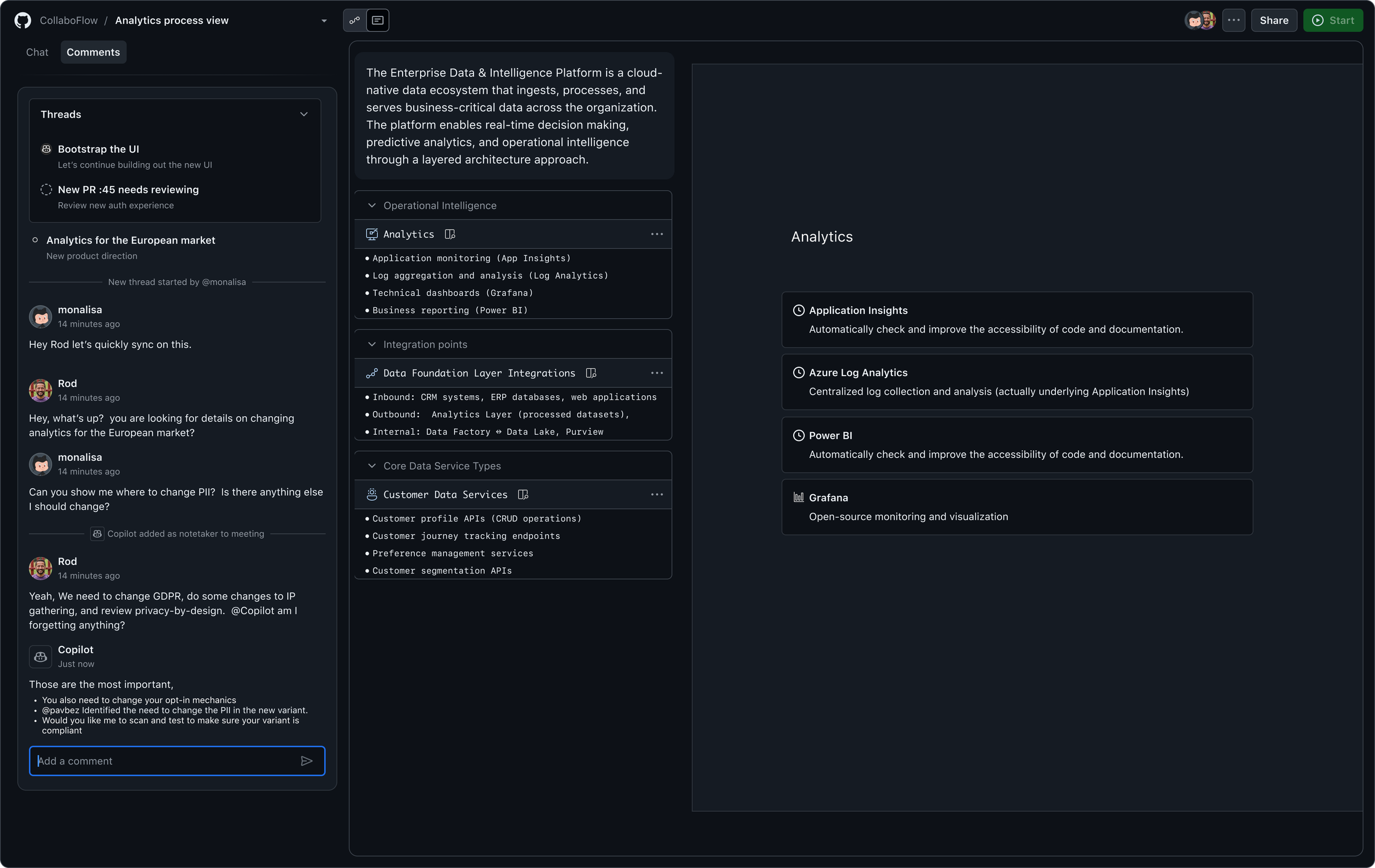
Key Capabilities Explored
AI-Driven Navigation — Explore and understand unfamiliar code efficiently
Automated, Explainable Pull-Request Reviews — AI surfaces issues with natural-language reasoning
Multi-Level Abstraction — Toggle between high-level planning and detailed code insights
Human–AI Collaboration Models — Integrate AI suggestions with team discussions and workflows
Rapid Concept Validation — Weekly demos showcased end-to-end workflows to leadership
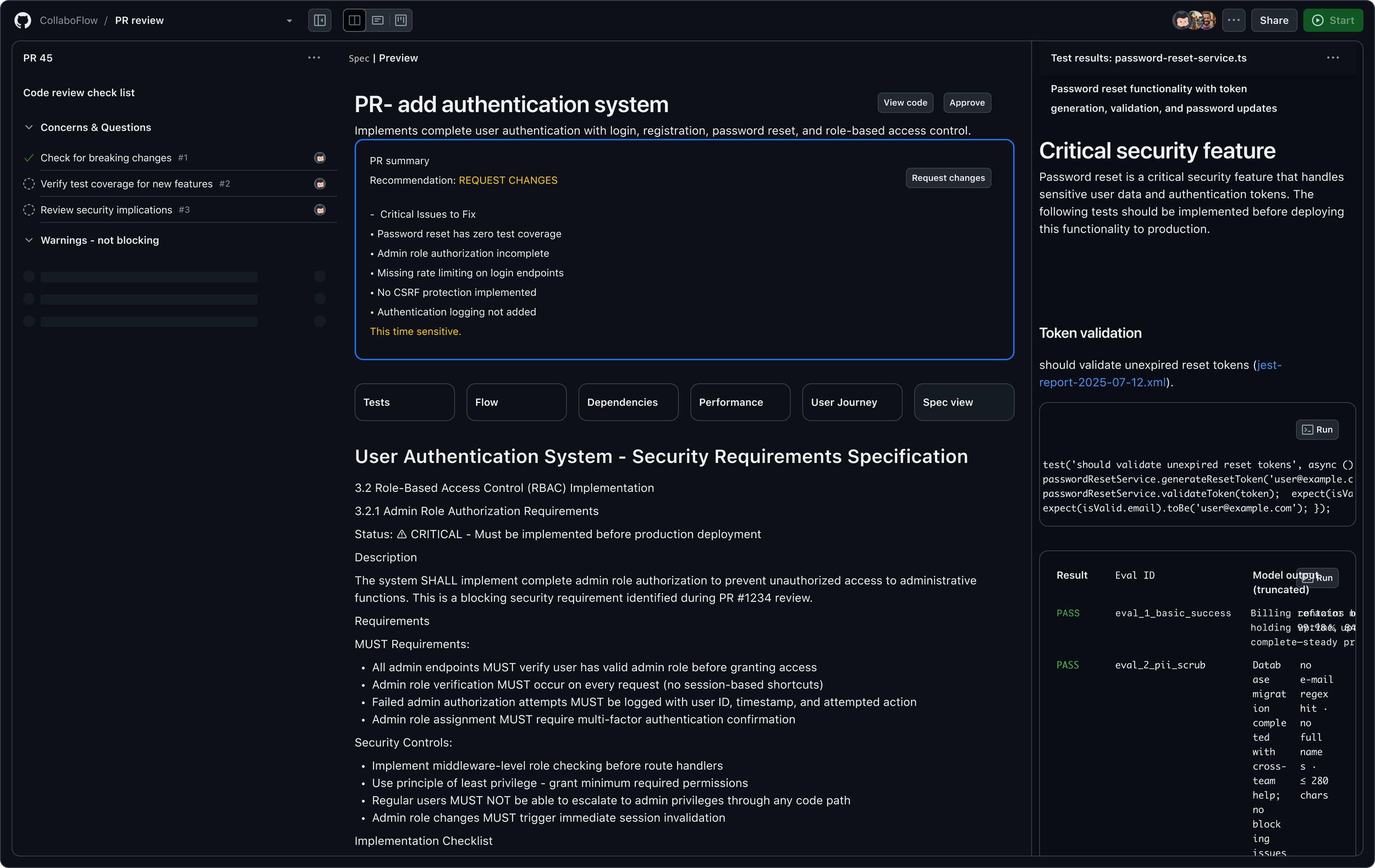
AI created PR summary
Design Process
Major workstreams and exploration themes included:
Rapid Prototyping & Concept Validation
Weekly Figma and vibe-coded demos to test ideas quickly and iteratively.Exploration of Developer Loops
Converged inner and outer loops to show AI assisting both personal coding and team-wide planning.Collaborative Flow Integration
Coordinated with the other designer to align end-to-end flows, merge ideas, and brainstorm new approaches to agentic interactions.Innovation Through Experimentation
Developed unconventional vibe-coded apps to explore creative approaches beyond structured workflows.
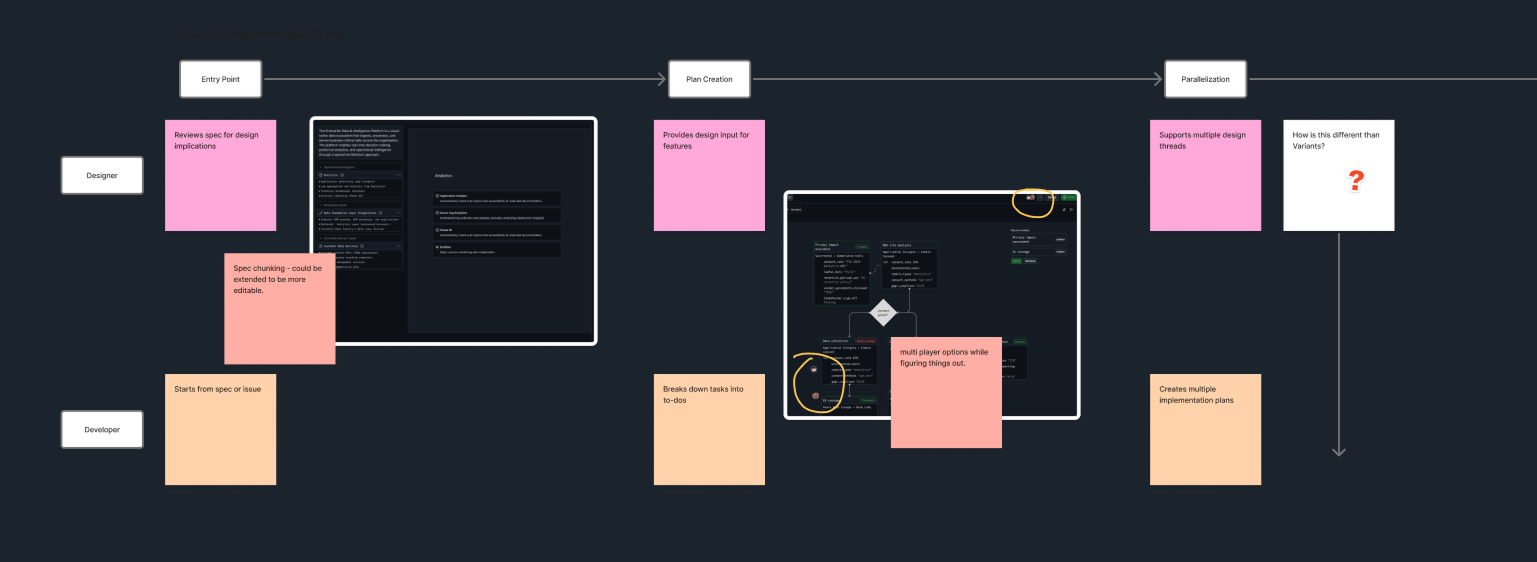
Working through user roles and user journeys
Impact & Outcomes
This work positioned AI-assisted workflows as a strategic direction for enterprise tools. Our prototypes informed leadership planning for AI-integrated IDEs and helped address competitive pressures in next-generation developer experiences.
My Role
I co-led design exploration with another designer, running weekly sprints that combined Figma prototypes with coded demos. We rapidly tested ideas, gathered stakeholder feedback, and synthesized insights to inform strategic planning.
Co-led design exploration
Created weekly Figma prototypes and coded demos
Designed abstraction layers and interaction patterns
Synthesized insights for leadership